MAXXO

SOFA MAXXO

designer: Juanny Barcelò Borges

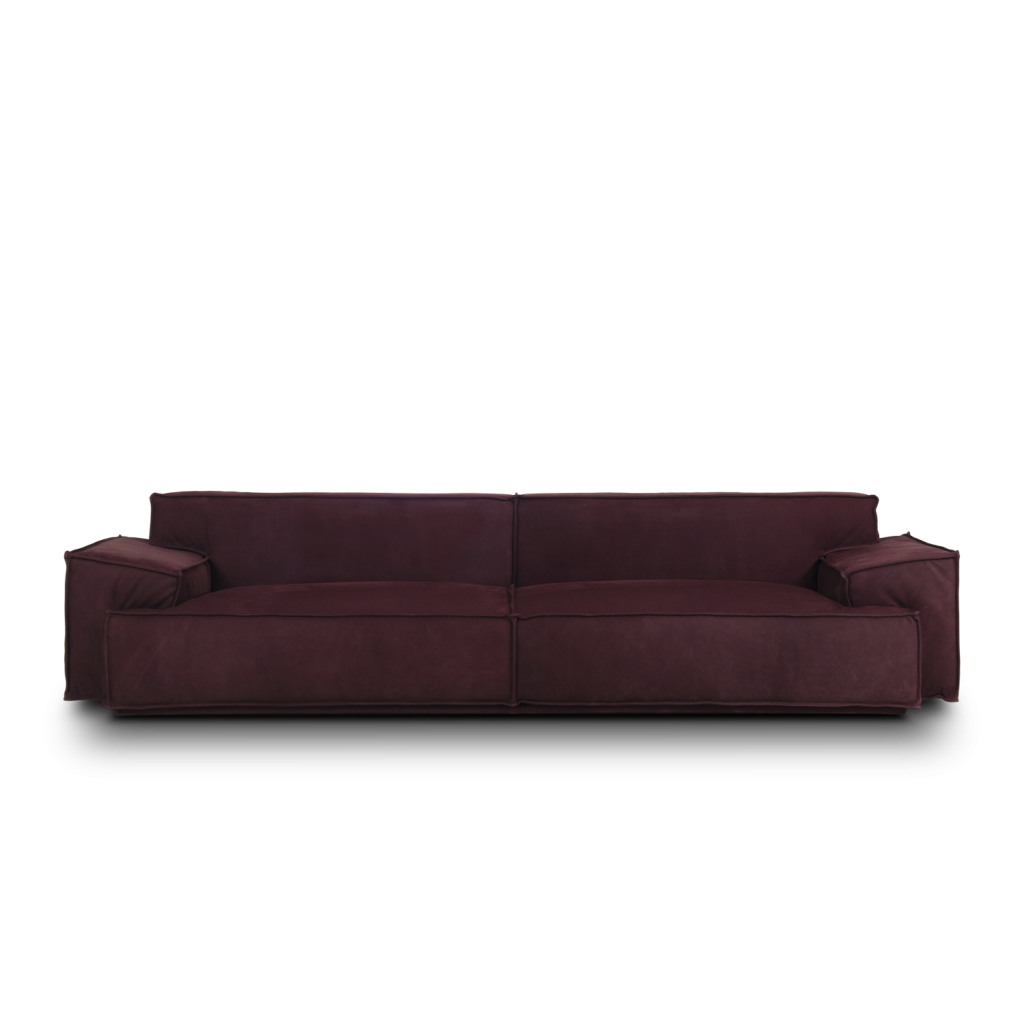
Maxxo is a sofa with a calm, architectural form, whose character is built on a few carefully crafted details. Slender metal legs lend the structure a visual lightness, creating an elegant contrast to its expressive form.

The architecture of good design is based on proportions, not an excess of detail. Maxxo is a collection created for interiors where timeless form, precise proportions and comfort are important.

The most characteristic element of the project is wide armrests, slightly extended beyond the main body and slightly inclined outwards. Slender metal legs lend the sofa a visual lightness, creating an elegant contrast to its geometric silhouette. The distinctive stitching along the contour subtly emphasizes proportions and evokes the craftsmanship of contemporary upholstery.

Thanks to the balanced shape of the Maxxo fits harmoniously into both modern and more eclectic interiors. It works well in private homes, representative reception areas, hotel lobbies, and lounge areas.

Maxxo connects architectural form, refined details and comfort. The project was awarded a certificate Longlisted 2022 in the Archiproducts Design Awards competition.

AWARDS RECEIVED

TYPE
Modular sofa, non-extendable

COMFORT TECHNOLOGY
Elastic belts – made of natural latex, ensuring the durability and elasticity of the seat.
SoftLayers™ – a system of multi-layer flexible foams, including a thermo+ layer, ensuring high comfort of use and high resistance to deformation.
VelaFit® – advanced nobonobo comfort technology based on ultra-thin fibers, ensuring exceptional lightness, elasticity and durability as well as a unique relaxation experience.

LEGS
Metal: chrome or matte black

UPHOLSTERY
Fabric or leather

COUNTRY OF PRODUCTION
Poland

Technical information

Materials and finishes

13 materials

DESIGNER

Juanna Barcelò Borges

A designer whose path led him through Milan and collaborations with renowned studios, including Claudio Bellini Design Group and Roberto Semprini Studio. From these experiences, he gained two complementary perspectives: an attention to form and the cultural dimension of design, and a pragmatic understanding of furniture as an industrial product.

In his work, he emphasizes that design should support the user, product strategy, and brand. For nobonobo, he designed the MAXXO sofa, with its strong shape and distinctive armrests.

DISCOVER OUR SOFAS

Nobonobo sofas combine contemporary design, timeless style, and exceptional comfort. The collection includes modular sofas that allow for the freedom to create individual configurations, as well as straight and extendable models. The variety of shapes and solutions allows you to tailor the sofa to the character of your interior and your individual style of relaxation.
Are you an Architect or Interior Designer?
Join the dedicated Zone For Professionals

Need individual support?

Contact our advisor who will propose appropriate solutions.

Technical information

Technical dimensions [mm]
1. Total height 730
2. Seat height 370
3. Armrest height 510-550
4. Armrest width 380
5. Total depth 1020
6. Seat depth 720
7. Leg height 130

Are you an architect or interior designer?

Register at Professionals Zone, to access 3D files, inspiring photos and more.

JUANNA BARCELÒ BORGES

A designer whose path led him through Milan and collaborations with renowned studios, including Claudio Bellini Design Group and Roberto Semprini Studio. From these experiences, he gained two complementary perspectives: attention to form and the cultural dimension of design and a pragmatic understanding of furniture as an industrial product.

In his work, he emphasizes that the design should support the user, the product strategy, and the brand. For nobonobo he designed the MAXXO sofa, with a strong shape and characteristic armrests.

Your design journey took you through Milan and collaborations with renowned design studios like Claudio Bellini Design Group and Roberto Semprini Studio. How have these experiences influenced the way you think about furniture design today?

Working in Milan was fundamental to how I think about furniture today, as it gave me two complementary perspectives. On the one hand, a strong focus on form, proportion, and the cultural dimension of design, the idea that a piece of furniture should have a clear identity and an emotional presence in space. On the other, a pragmatic understanding of furniture as an industrial product: something that must be designed, manufactured, and positioned in the market.

At Claudio Bellini Design Group, I learned a structured, international approach in which aesthetics, brand language, production constraints, and commercial objectives had to coexist. Roberto Semprini Studio, on the other hand, emphasizes the value of expressive form, atmosphere, and narrative. Together, they taught me to view furniture not as isolated objects but as part of a broader system encompassing users, production, brand identity, and strategy, a principle that still guides my work today.

maxxo detal armagnac@0,5x

In your work, you emphasize that design should support not only the user but also product strategy and brand development. How does this philosophy influence the way you approach new projects?

For me, design begins with the user, but it should never end there. A good product must meet the practical and emotional needs of the person who lives with it, but it must also make sense within the broader brand strategy.

When I begin a project, I try to understand several layers at once: who the product is for, how it will be used, what space it belongs in, and what role it should play in the company's catalog. Sometimes the product needs to be commercial and accessible, sometimes it needs to be a distinctive element that adds personality to the entire product range. This helps me make informed decisions about proportions, materials, details, and cost. My goal isn't simply to create a pretty item, but one that is cohesive, useful, desirable, and strategically relevant to the brand.

Your designs often combine sculptural form with a keen attention to detail and proportion. Where do you most often draw inspiration from? Is it materials, architecture, technology, or perhaps observing how people use furniture?

Inspiration usually comes from the combination of different elements, rather than from a single source. Architecture is important to me, as is the way volumes, lines, and proportions create presence and rhythm in a space. I'm interested in how a single detail or silhouette can define an object.

At the same time, observing how people actually live with furniture is essential. Furniture is always close to the body and daily rituals, so comfort and movement influence design. Materials are equally important, as they can imbue a form with a warmer, softer, lighter, or more architectural character. In a sense, inspiration is the meeting point of these worlds: architecture for structure and proportion, materials for character and touch, and real life for comfort.

„The starting point for MAXXO was a sofa that appeared minimalist in its overall styling, but at the same time had a strong sculptural identity: visually calm and architectural, yet instantly recognizable thanks to a few carefully crafted details.”

The MAXXO sofa stands out for its strong, architectural shape and distinctive armrests. What was the main idea behind this design, and how did it develop during the design process?

The starting point for MAXXO was a sofa that appeared minimalist in its overall styling, but at the same time had a strong sculptural identity, visually calm and architectural, yet instantly recognizable thanks to a few carefully crafted details.

The focal point was the large armrests, which protrude slightly outward, giving the impression of being suspended above the main body. They add character to the sofa, but they aren't just decorative: their slight inclination also contributes to comfort. Another key element was the stitched contour that runs along the silhouette. I like to use stitching almost as a graphic tool to emphasize the profile and give the form a more tailored feel.

With a design like MAXXO, everything depends on balance: if the armrests become too heavy, the sofa loses its elegance; if the details are too subtle, the identity disappears. The design's evolution was really about refining the proportions until sculptural expression and comfort could coexist.

„Inspiration usually comes from the combination of various elements, rather than from a single source. Architecture is important to me, as is the way volumes, lines, and proportions create presence and rhythm in a space. I'm interested in how a single detail or silhouette can define an object.„`

When designing sofas, the balance between expressive form and comfort is key. How did you combine these two aspects in this project?

For me, comfort must be part of the design logic from the very beginning. With MAXXO, the intention was to create a sofa with a distinctive, architectural presence, without feeling stiff or intimidating.

This balance was achieved primarily through proportions and detailing. The shape is bold and clearly defined, but softened by the way the armrests protrude outward and are slightly angled, creating a more welcoming position. The generous cushions and visual softness of the upholstery balance the geometry of the frame.

The most interesting furniture often operates in this tension between precision and softness. I wanted the MAXXO to stand out from a distance, yet convey a sense of security and comfort the moment you sit on it.

SEARCH ENGINE

Discover nobonobo

Find your model, collection or inspiration.