MARGO

SOFA MARGO

designer: Nelson de Araújo

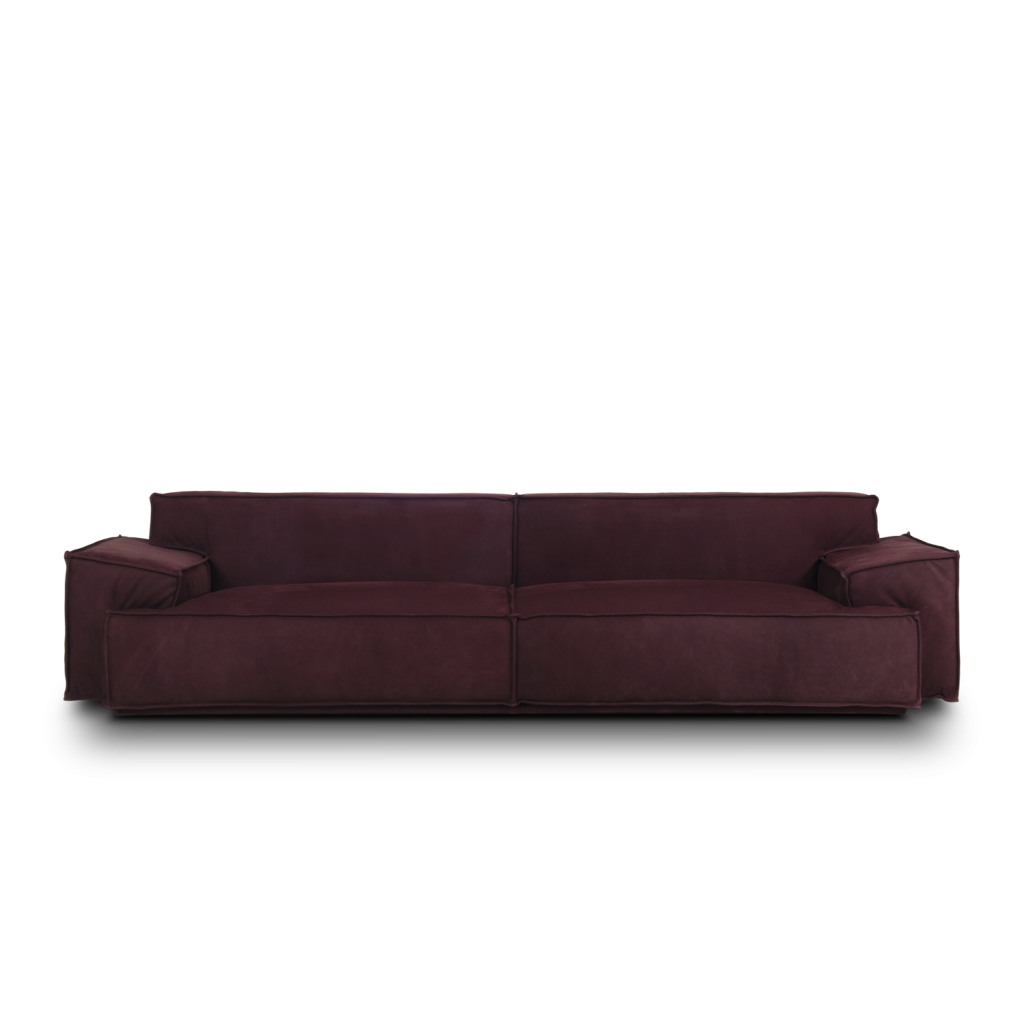
Margo is a minimalist sofa, built on balanced proportions and gently curved lines. Its distinctive wooden base subtly emphasizes the horizontal shape of the piece.

The inspiration for the Margo collection was autumn in Portugal – calm, warm and full of natural shades. Nelson de Araújo translated this atmosphere into a design based on simplicity, harmony, and balanced proportions.

Margo stands out low, horizontal silhouette and wide, gently rounded seats. An important design element is the wooden base, whose slim lines emphasize the sofa's expansive shape and provide a subtle contrast to the upholstered surfaces.

The starting point for the project was ergonomics and comfort of use, on which the designer built a balance between aesthetics and function. For even greater comfort, the Margo sofa can be supplemented with backrest cushions filled with VelaFit®, providing soft and comfortable back support.

Margo's minimalist form gains a warm, natural character thanks to rounded lines, wooden details and refined proportions.

The Margo project was appreciated by the Polish design community, winning must have 2022 distinction awarded as part of the Łódź Design Festival.

AWARDS RECEIVED

TYPE
Modular sofa, non-extendable

COMFORT TECHNOLOGY
Elastic belts – made of natural latex, ensuring the durability and elasticity of the seat.
SoftLayers™ – a system of multi-layer flexible foams, including a thermo+ layer, ensuring high comfort of use and high resistance to deformation.
VelaFit® – advanced nobonobo comfort technology based on ultra-thin fibers, ensuring exceptional lightness, elasticity and durability as well as a unique relaxation experience.

BASE
Beech, available in colors:
scandinavian, walnut, ebony, black

UPHOLSTERY
fabric or leather

COUNTRY OF PRODUCTION
Poland

Technical information

Materials and finishes

14 materials

DESIGNER

Nelson de Araújo

A Portuguese designer whose breakthrough came with a nearly year-long stay in Italy during his studies, and his direct contact with a design culture deeply rooted in everyday life. He grew up in a peaceful, seaside town, immersed in the rhythm of slow living, and it is this closeness to nature that continues to shape his pursuit of minimalism and balance.

For nobonobo, he designed the Margo sofa and armchair, as well as the Roots table, in which the combination of metal and wood reflects his pursuit of material honesty.

DISCOVER OUR SOFAS

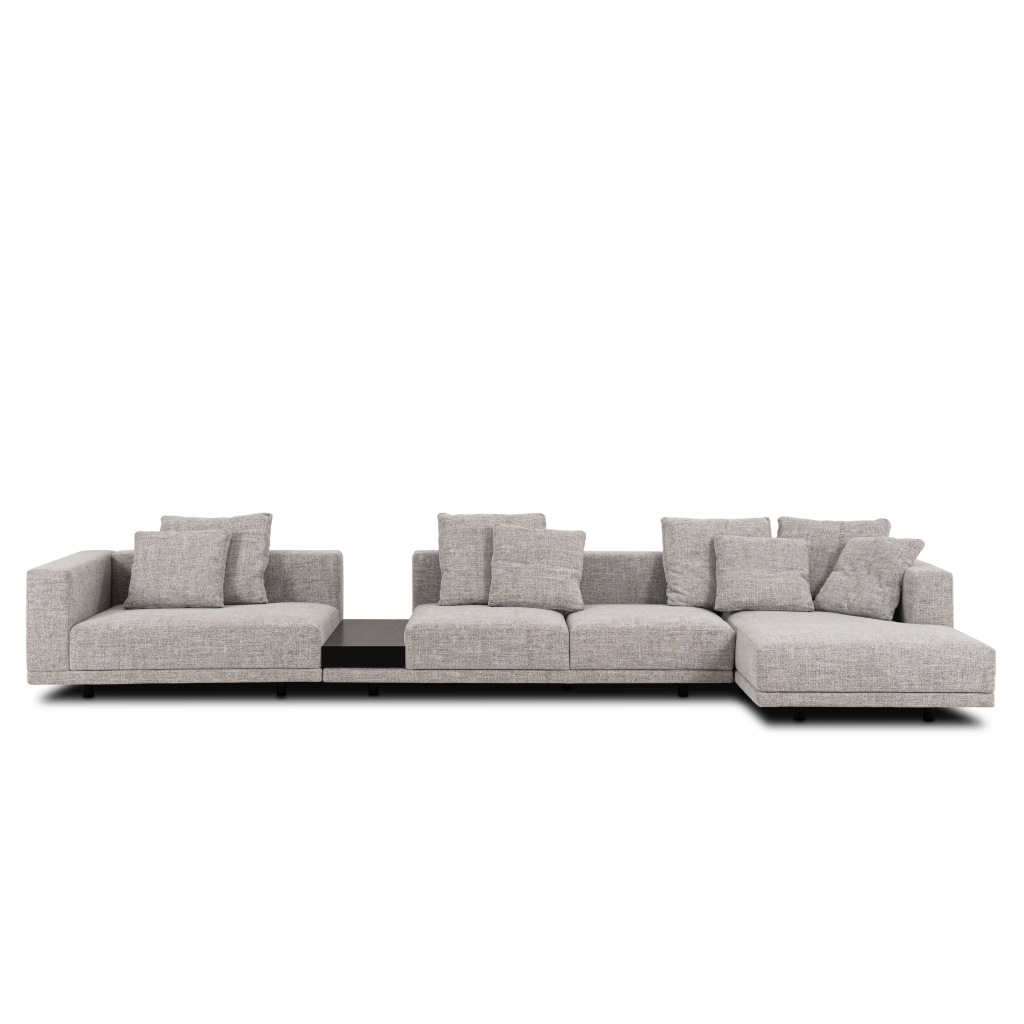
Nobonobo sofas combine contemporary design, timeless style, and exceptional comfort. The collection includes modular sofas that allow for the freedom to create individual configurations, as well as straight and extendable models. The variety of shapes and solutions allows you to tailor the sofa to the character of your interior and your individual style of relaxation.
Are you an Architect or Interior Designer?
Join the dedicated Zone For Professionals

Need individual support?

Contact our advisor who will propose appropriate solutions.

Technical information

Technical dimensions [mm]
1. Total height 710
2. Seat height 380
3. Total depth 1120
4. Seat depth 820
5. Seat depth with cushion 650
6. Leg height 40

Are you an architect or interior designer?

Register at Professionals Zone, to access 3D files, inspiring photos and more.

NELSON DE ARAÚJO

Portuguese designer, for whom the breakthrough came during his almost year-long stay in Italy during his studies and direct contact with the design culture deeply rooted in everyday life. He grew up in a quiet seaside town, in the rhythm of slow living, and it is this closeness to nature that shapes his personality to this day. the search for minimalism and balance.

For nobonobo, he designed the Margo sofa and armchair, as well as the Roots table, in which the combination of metal and wood reflects his pursuit of material honesty.

Your path to furniture design began in Portugal, but a stay in Italy during your studies was also a significant moment. How did these experiences shape your way of thinking about design?

Each of these environments introduced me to a different approach to design. However, it was my first professional experience at a design studio in Spain that truly opened my eyes to the responsibility of designing for industry, as well as the opportunities this profession offers. It was then that I felt the need to look at design more broadly than just through the prism of the product itself. The subsequent creation of the Calma Creative studio allowed me to develop this approach and collaborate with industry on many levels.

The form, material, and perception of a piece of furniture are often the essence of a design, but in practice, they're only part of a much more complex process. My first few years working in Spain taught me, above all, how fascinating, demanding, and unpredictable design is. Each project brings new questions and challenges. And that's precisely why I wouldn't trade this job for any other.

Nelson de Araujo Roots 02

You often speak of minimalism and balance in your designs. Where do you most often draw inspiration from? Is it observations of nature, architecture, travel, or perhaps the everyday experiences of users?

I believe my greatest inspiration comes from my roots. I grew up in a very quiet city with a slow-paced lifestyle, always close to the sea, rivers, and mountains. Although I no longer live there, this connection with nature remains with me and strongly influences my creativity and my search for minimalism and balance.

On the other hand, traveling is fundamental to me. Experiencing different cultures and customs leads me to question how we live and interact with objects on a daily basis. It is from this blend of nature and contact with new realities that the desire to test materials, create new shapes, and challenge the boundaries of my work is born.

You designed several different pieces of furniture for nobonobo—the Margo sofa and armchair, and the Roots table. Did you envision them as elements of a shared design language from the outset?

Funnily enough, no. Both the Margo line and the Roots table originated from loose sketches, ideas that emerged as I explored shapes, colors, and materials. Initially, they weren't designed as a „family” or to share the same space. However, because they were created around the same time, they developed a similar language and coexist perfectly. Furthermore, I always strive to maintain a clear identity in what I do. I believe it's precisely because of this constant connection that my works ultimately speak the same language and fit together so naturally.

„The Roots table was created while I was exploring the combination of metal and wood. These two materials come from nature, but although they go through industrial processes before taking on their final form, their natural origins are still present.”

The form of the Roots table clearly evokes the organic shapes of nature. What was the process of translating this inspiration into a specific structure and material?

The Roots table was created while I was exploring the combination of metal and wood. These two materials come from nature, and although they go through industrial processes before they take their final form, their natural origins are still present. For me, furniture design must be as honest as possible. My creative process largely revolved around this: I tried to limit the use of artificial materials and let the structure, weight of the metal, and the texture of the wood speak for themselves. This way, I could bring this organic inspiration to the design—honestly and without pretense.

„My approach is to always start with this ergonomic base—it's the skeleton of the design. Only then do I slowly begin to adapt the form and work on the design. This way, I ensure the design is not only visually appealing but also genuinely comfortable and inviting.”

In designs like the Margo sofa and armchair, the balance between expressive form and comfort is crucial. How do you achieve that point where a design becomes both aesthetically pleasing and truly comfortable?

It all starts with a fundamental principle: ergonomics, always adapted to the market we're designing for. Proven ergonomic solutions already exist, and we know they work and guarantee comfort. The real challenge is finding the perfect balance between aesthetics and functionality.

My approach is to always start with this ergonomic base—the skeleton of the design. Only then do I slowly begin to adapt the form and work on the design. This way, I ensure that the design is not only visually appealing but also genuinely comfortable and inviting.

SEARCH ENGINE

Discover nobonobo

Find your model, collection or inspiration.