BACIONE

FOTEL BACIONE

projektant: Ruya Akyol STUDIO

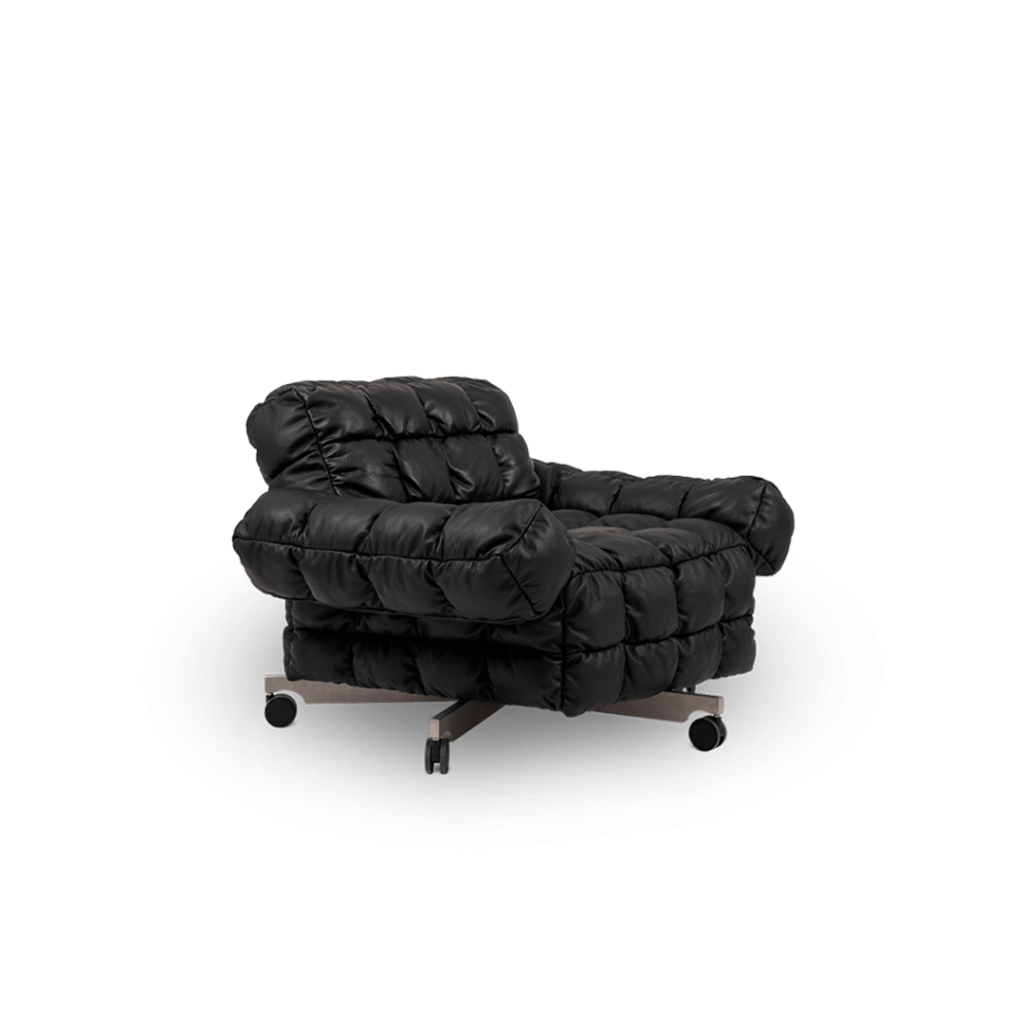
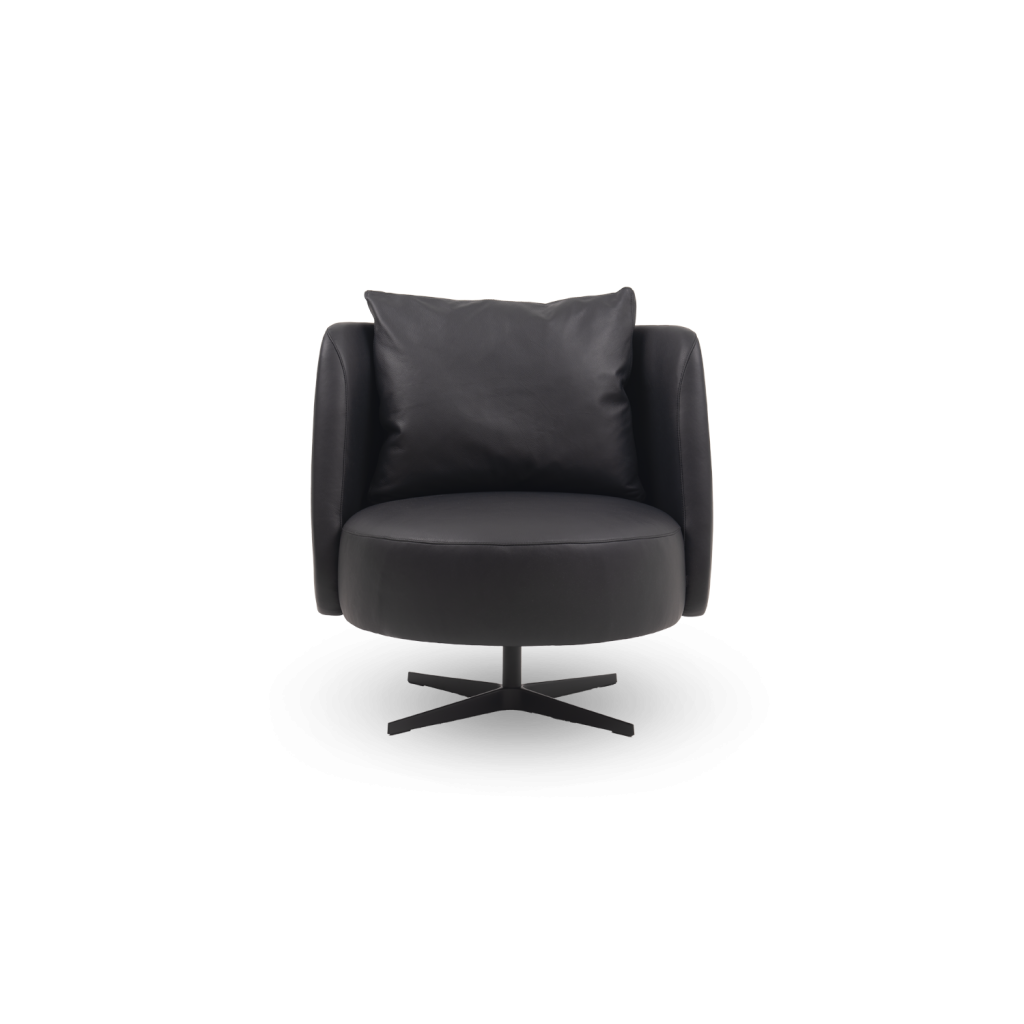
Bacione to fotel zaprojektowany jak gest powitania – miękki, szczery i naturalnie bliski. Jego pełne proporcje i zaokrąglona sylwetka tworzą formę, która zaprasza do odpoczynku i nadaje wnętrzu ciepły, wyrazisty charakter.

Bacione po włosku oznacza „wielki pocałunek” – i właśnie od gestu czułego powitania po powrocie do domu narodziła się idea fotela. Projektantka chciała stworzyć mebel, który poprzez swoją formę będzie wyrażał bliskość i emocje, bez potrzeby stosowania dekoracyjnych detali.


Miękkie, zaokrąglone bryły i otulające proporcje budują charakter Bacione. Szerokie siedzisko, płynne linie i brak ostrych krawędzi sprawiają, że fotel wydaje się ciepły i przyjazny, a jednocześnie zachowuje prostą, współczesną formę. Dzięki wyrazistym proporcjom może stać się mocnym elementem aranżacji zarówno we wnętrzach mieszkalnych, jak i przestrzeniach komercyjnych.

TYPE
Armchair

UPHOLSTERY
fabric or leather

COUNTRY OF PRODUCTION
Poland

Technical information

Materials and finishes

13 materials

DESIGNER

Ruya Akyol STUDIO

Projektantka wywodząca się ze Stambułu, absolwentka Istanbul Technical University, Politecnico di Milano i Domus Academy. Zdobywała doświadczenie u boku Claudia Belliniego w Mediolanie i Philippe’a Starcka w Paryżu. Jej styl to synteza włoskiej kultury projektowej, skandynawskiego minimalizmu i anatolijskiego dziedzictwa. Prowadzi własne studio, zajmując się także tożsamością marek i art direction.

The nobonobo collection includes her Bacione armchair with a soft, enveloping shape, whose name means „big kiss” in Italian.

Are you an Architect or Interior Designer?
Join the dedicated Zone For Professionals

Need individual support?

Contact our advisor who will propose appropriate solutions.

Technical information

Technical dimensions [mm]
1. Total height 759
2. Overall width 921
3. Długość całkowita 871
4. Seat depth 580

Are you an architect or interior designer?

Register at Professionals Zone, to access 3D files, inspiring photos and more.

RUYA AKYOL

Designer from Istanbul, graduate of Istanbul Technical University, Politecnico di Milano and Domus Academy. She gained experience working with Claudio Bellini in Milan and Philippe Starck in Paris. Her style is a synthesis of Italian design culture, Scandinavian minimalism and Anatolian heritage. He runs his own studio, also dealing with brand identity and art direction.

The nobonobo collection includes her Bacione armchair with a soft, enveloping shape, whose name means „big kiss” in Italian.

You grew up in Istanbul, studied at the Politecnico di Milano and the Domus Academy, and worked with Claudio Bellini in Milan and Philippe Starck in Paris. These are two completely different design temperaments: Italian precision and rigor on the one hand, provocation and theatricality on the other. What did you gain from each of these experiences?

This gave me the opportunity to look at design from three different perspectives. At the Istanbul Polytechnic and the Milan Polytechnic, I gained a solid education in production, design principles, and the fundamentals of the field. Domus Academy, on the other hand, gave me a broader understanding of the marketing and visual aspects of design through projects I carried out in collaboration with designers and companies in the industry.

I began working with Claudio Bellini very early in my career and gradually developed within that studio, which shaped my working method while allowing my creative side to flourish. Finally, while working with Philippe Starck, I had the opportunity to observe the highly original and personal way he approaches projects and clients. This experience inspired me to forge my own path.

detal bacione

Your style has been described as a synthesis of contemporary Italian design culture and Scandinavian minimalism, yet you are also a designer shaped by Istanbul and your Anatolian heritage. How do these three perspectives—Middle Eastern, Mediterranean, and Nordic—interact in your daily work?

Combining these different cultures and practices with my own perspective helped me develop a personal design language. Coming from a diverse culture, after many years living in Italy, I learned to design objects with proper proportions and attention to detail. I've always been passionate about Scandinavian design, and marrying a Swedish architect allowed me to deeply understand minimalism and experience it firsthand in Stockholm.

I usually start my designs from a very conceptual perspective, then give objects their appropriate dimensions and proportions. Finally, I examine the design to understand what can be removed or added to achieve the most relevant version of the idea.

Bacione means „big kiss” in Italian, and this name is also a precise description of the form: soft shapes, curves, and enveloping proportions. What was the starting point? Did the word come first, or the form?

The idea of designing an iconic, rounded, and cozy armchair came to me from the very beginning. Later, I realized that giving someone a kiss upon returning home seemed like the most sincere gesture of welcome.

I asked myself why not design an armchair that gives a kiss, especially in times when everything is becoming less and less authentic and personal?

„(…) The thought occurred to me that giving someone a kiss upon returning home seemed like the most sincere gesture of welcome. I asked myself, why not design an armchair that gives a kiss, especially in a time when everything is becoming less and less authentic and personal?”

In the Bacione armchair, warmth and sensuality are achieved without any literal gestures. There are no ornaments or decorative details. How do you work to ensure that an abstract form conveys such a concrete, almost physical feeling?

For me, form is never just a matter of geometry. It's also about emotion, gesture, and memory. With Bacione, I wanted the shape to feel instinctive, almost familiar, like something you immediately want to approach and touch.

I usually start with a general idea and then work through many variations and iterations until the piece embodies that idea with minimal effort. In this case, the softness, rounded shapes, and enveloping proportions stem from precisely that intention: to create a piece that feels warm, generous, and discreetly intimate, without the need for additional decoration.

„For me, form is never just a matter of geometry. It's also about emotion, gesture, and memory. In Bacione's case, softness, rounded shapes, and enveloping proportions stem from the intention to create a work that feels warm, generous, and discreetly intimate, without the need for additional decoration.”

In addition to design, you work with brand identity and art direction. Does this dual perspective, as a creator of objects and an architect of visual communication, influence the way you think about the furniture you design?

I believe that all design disciplines are closely interconnected. During my studies, I tried to take as many communication design classes as possible to strengthen my visual perspective.

As the founder of a design studio that also offers art direction services, I work on projects spanning material libraries and visual communication tools, as well as interior and product design. This approach allows me to understand what each discipline needs from the others and hone my skills not only from the perspective of individual design disciplines but also through a more holistic and comprehensive approach.

SEARCH ENGINE

Discover nobonobo

Find your model, collection or inspiration.