TUPAK

FOTEL TUPAK

designer: Tomek Rygalik

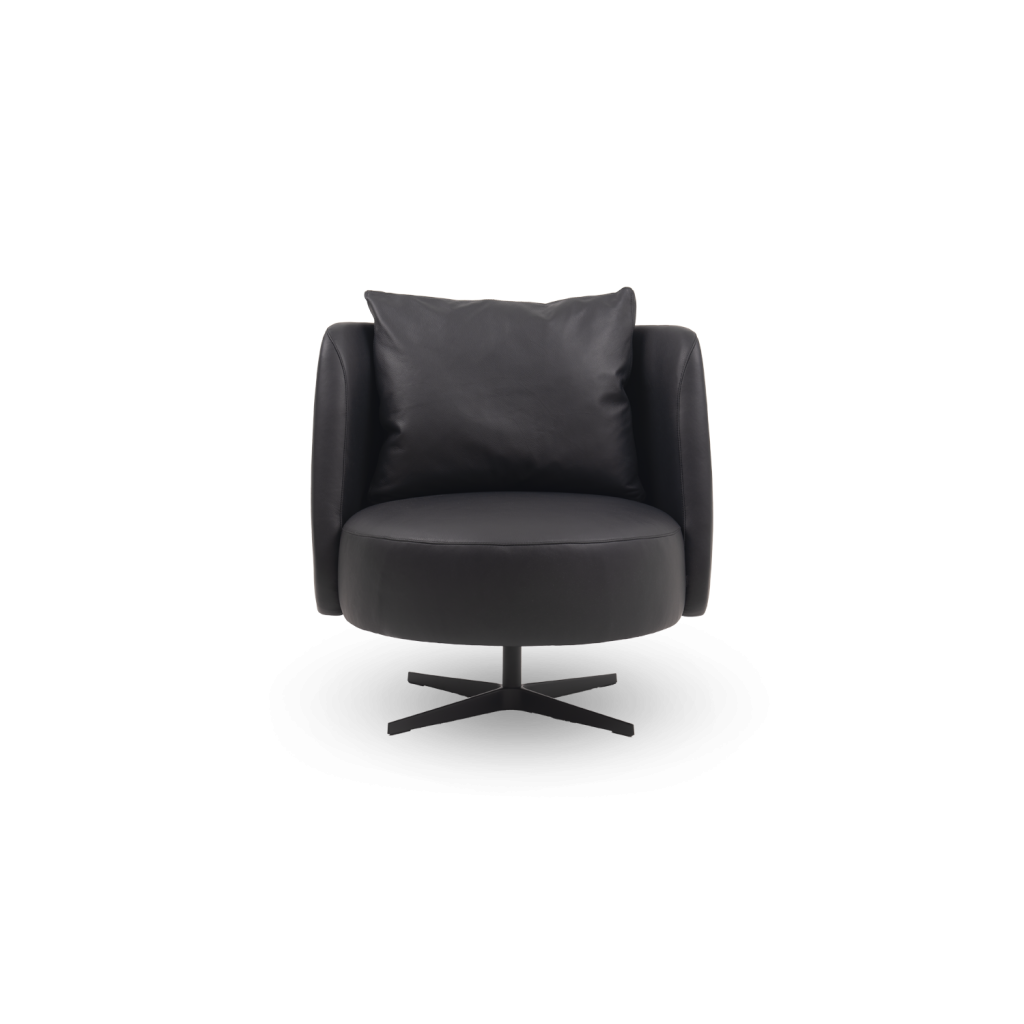
Tapicerowany fotel wypoczynkowy o organicznej formie, z otulającym oparciem i zintegrowaną poduszką lędźwiową, łączący komfort siedzenia z naturalnym charakterem drewna.

Fotel Tupak, zaprojektowany przez Tomka Rygalika, wyróżnia się organiczną formą i harmonijnymi proporcjami. Łagodnie zaokrąglone oparcie płynnie przechodzi w podłokietniki, tworząc spójną, otulającą sylwetkę. Miękkie linie tapicerowanej bryły kontrastują z prostą formą drewnianych nóg, nadając meblowi lekkość i elegancki charakter.

Otulające oparcie i zintegrowana poduszka lędźwiowa zapewniają wygodne podparcie pleców, zwiększając komfort podczas dłuższego siedzenia. Miękkie siedzisko i starannie wyprofilowane podłokietniki sprzyjają odprężeniu, tworząc przyjazne miejsce do czytania, rozmów i codziennego wypoczynku.


Toczone nogi z drewna bukowego stanowią naturalne dopełnienie tapicerowanej formy. Ich smukła linia podkreśla proporcje fotela, a możliwość wyboru spośród czterech wariantów kolorystycznych pozwala dopasować wykończenie do charakteru wnętrza.

Dzięki wyważonej estetyce Tupak odnajduje się zarówno in residential interiors as well as contract spaces. Sprawdzi się w salonach, gabinetach, hotelowych lobby oraz kameralnych strefach wypoczynkowych, wprowadzając do aranżacji naturalne materiały, miękkie formy i komfort.

TYPE
Upholstered armchair

DESTINY
Residential and contract interiors
możliwość zastosowania pianki trudnopalnej

LEGS
Drewno bukowe – olej, 4 warianty kolorystyczne

UPHOLSTERY
Fabric or leather

COUNTRY OF PRODUCTION
Poland

Technical information

Materials and finishes

14 materials

DESIGNER

Tomek Rygalik

One of Poland's most recognizable designers, he served as artistic director of nobonobo from 2019 to 2022. His practice combines formal discipline with material experimentation and often speaks about the moral dimension of design—creating things that deserve to exist.

For nobonobo he created an extensive family of Wadi furniture (sofa, armchair and pouffe), as well as the Raksa sofa, the Tupak armchair, the Nato table set and the Oo table.

Are you an Architect or Interior Designer?
Join the dedicated Zone For Professionals

Need individual support?

Contact our advisor who will propose appropriate solutions.

Technical information

Technical dimensions [mm]
1. Total height 860
2. Overall width 625
3. Total depth 680
4. Seat depth 515
5. Seat height 450
6. Leg height 330

Are you an architect or interior designer?

Register at Professionals Zone, to access 3D files, inspiring photos and more.

TOMEK RYGALIK

One of the most recognizable Polish designers, artistic director of nobonobo from 2019 to 2022. In his practice, he combines formal discipline with material experimentation and often speaks about the moral dimension of design – creating things that deserve to exist.

For nobonobo he created an extensive family of Wadi furniture (sofa, armchair and pouffe), as well as the Raksa sofa, the Tupak armchair, the Nato table set and the Oo table.

From 2019 to 2022, you served as nobonobo's artistic director, a role fundamentally different from commissioned design. How did this dual role of simultaneously creating and curating the brand's identity influence the way you thought about each new project?

Creating the brand from scratch, including its name, logo, and strategic foundations, served as the starting point for further work, such as designing products that would constitute the new identity. These products were to express a completely new approach to offerings, based on the originality of the original design, which already boasted a high level of craftsmanship.

To define this direction and establish a coherent aesthetic—a foundation for further development—several interconnected furniture types were needed, each addressing different market needs: from a sales hit, through an image icon, to complementary armchairs and tables. While this may sound simple today, it was a significant challenge and a huge amount of work, especially considering the varying levels of design awareness and market attitudes at the time.

Wadi_Vamos07_detal_3547

Wadi is the most extensive furniture family you've created for nobonobo, encompassing a sofa, armchair, and pouffe. What's the idea behind this collection?

Almost every product family I design incorporates a modular system, allowing for the creation of various configurations and types. Most sofas available on the market are based on a similar typology and construction principle, so in this collection I deliberately utilized a much less common configuration method, based on repeating modules in the form of „slices.” Their number defines the width of the seat, and on either side are similar modules with armrests.

The main idea was to create a model that could be disassembled into its basic components – not only for washing the fabric, but above all for the possibility of repairing or disposing of individual materials, in the spirit of sustainable development.

Your designs are based, among other things, on a dialogue between formal discipline and material experimentation. How do these principles work in the case of upholstered furniture, whose form is largely defined by softness and the concealment of structure?

I also design upholstered products from the inside out, ensuring they are carefully considered in every respect. Good function and form are the result of this approach.

„Most sofas available on the market are based on a similar typology and construction principle, so in the Wadi collection I deliberately used a much less common configuration method, based on repeating modules in the form of „slices.” Their number defines the width of the seat, with corresponding modules with armrests on either side.”

You often speak about the moral dimension of design, about creating things that deserve to exist. How does this ethics operate within the everyday reality of a furniture brand?

This is a significant and complex dilemma stemming from the consumerist paradigm. We all participate in shaping the world around us every day – from experiences and emotions, through workplaces, to the modernization and development of the country, as well as waste generation and environmental impact.

It is good to actively support positive changes at every step, thus developing awareness of yourself and your surroundings.

„We all participate in shaping the world around us every day – from experiences and emotions, through jobs, to the modernization and development of the country, as well as the generation of waste and the impact on the natural environment.

It is good to actively support positive changes at every step, thus developing awareness of yourself and your surroundings.”

Looking at the entire collection you created for nobonobo – from the Wadi furniture, through the Raksa sofa and Tupak armchair, to the Nato coffee table set and the Oo table – is there a formal or philosophical thread that connects these designs into a coherent story?

This is a coherent story, formally, materially, technologically, and ethically, constituting a new, credible brand. It provides a foundation and unlimited potential for further development, not only in the material sphere.

SEARCH ENGINE

Discover nobonobo

Find your model, collection or inspiration.