LANUBE DREAM

LANUBE DREAM BED

designer: EWA PÓŁTORAK

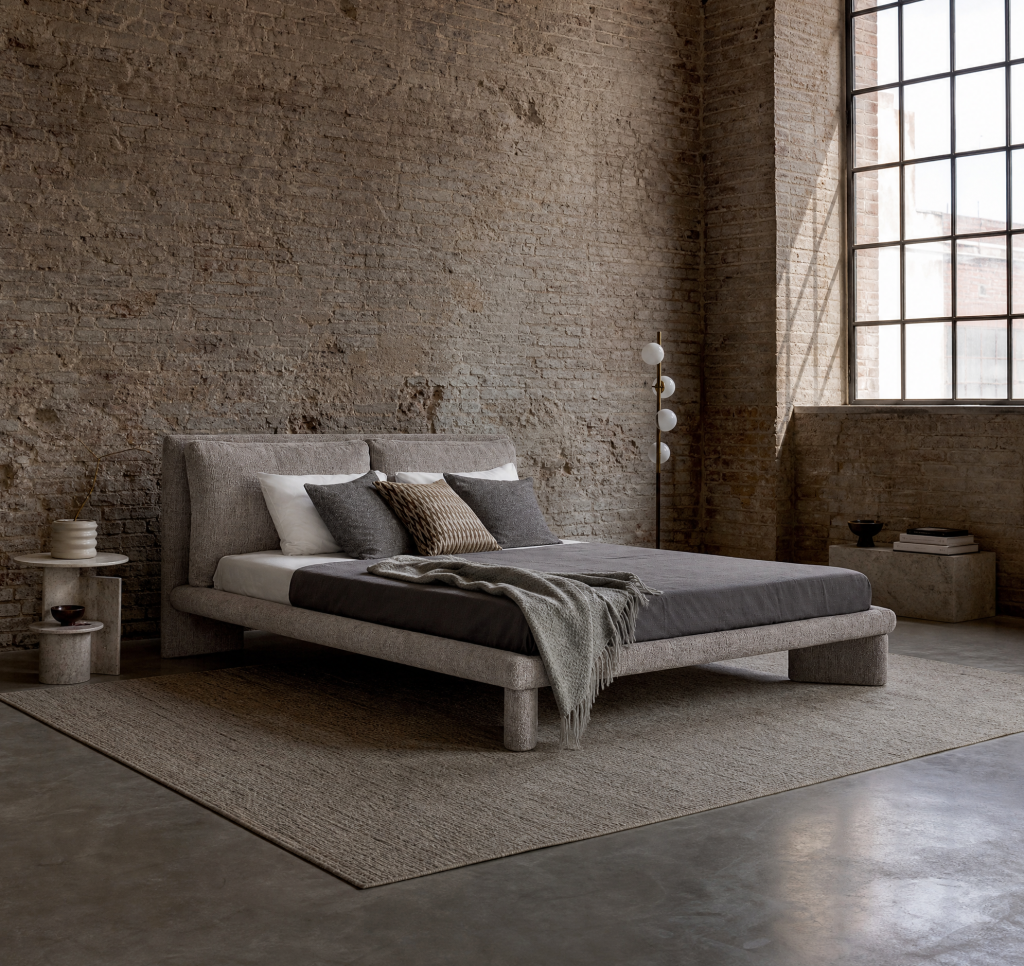
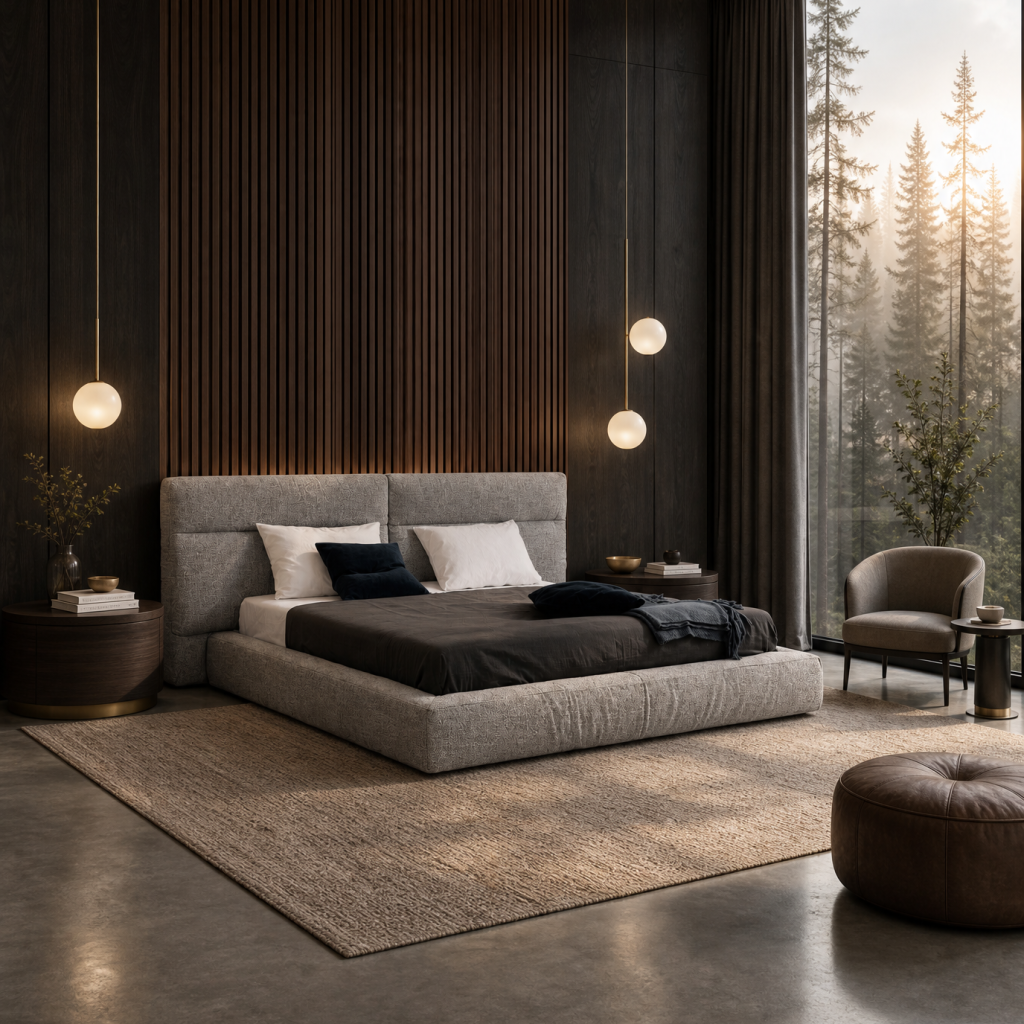
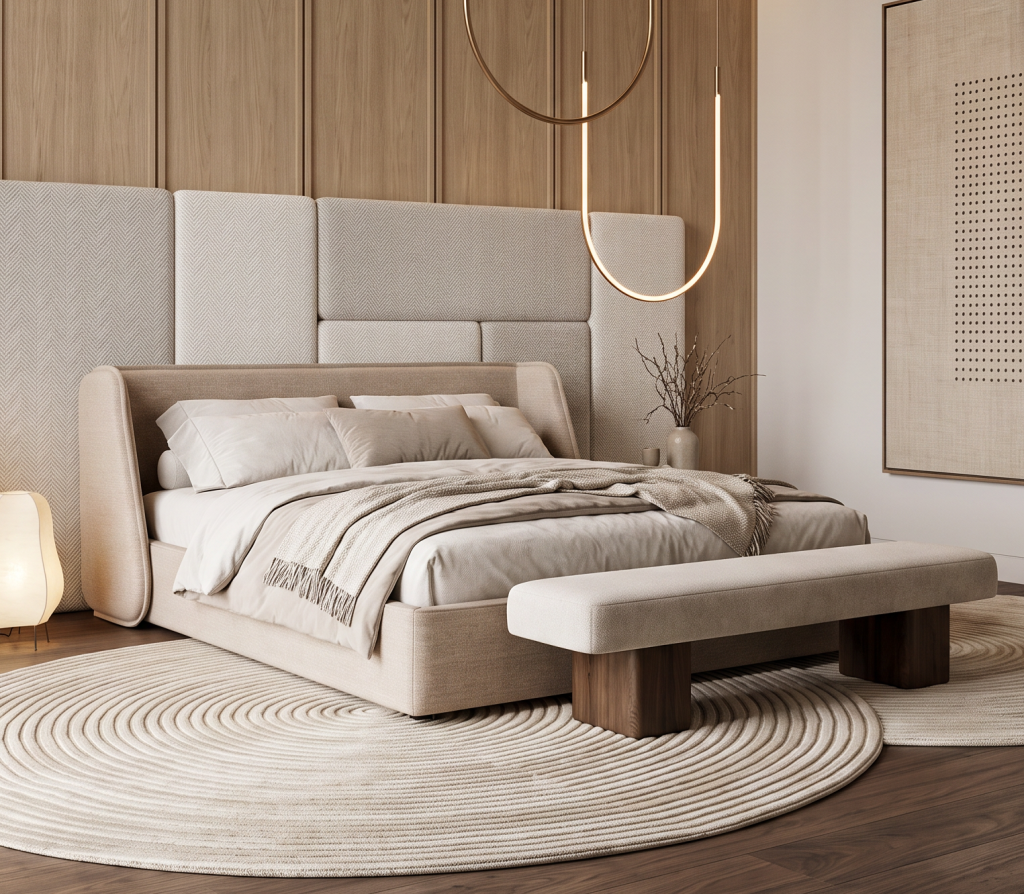
Lanube is an upholstered bed with a soft, architectural design. Its rounded shapes, subtle quilting, and distinctive bolsters give it a distinctive character.

Lanube is an upholstered bed with soft, calm form and architectural character. Rounded lines and carefully balanced proportions create a harmonious shape that brings an atmosphere of visual calm to the bedroom.

The characteristic element of the project is subtle quilting, which give the frame rhythm and emphasize the soft volumes of the bed. The detail remains discreet, allowing the form to retain its simplicity and timeless character.

The headboard is complemented by two cylindrical rollers, an integral part of the design. They constitute a recognizable detail of the Lanube collection and emphasize its comfortable, informal character.

The bed expands on the Lanube sofa's stylistic language, extending it from the living room to the bedroom. Both designs share the same concept. comfort, softness and peace, creating a coherent collection of contemporary lounge furniture.

TYPE
Bed with bedding container

DIMENSIONS
Available under mattresses:
140 x 200 cm | 160 x 200 cm 
180 x 200 cm | 200 x 200 cm 

FRAME
The structure is made of laminated wood, padded with upholstery foam, and covered with black velvet. The frame is designed for self-assembly according to the instructions. A cover made of the selected upholstery material, attached with Velcro after the frame is assembled, conceals all structural joints. This solution ensures a perfectly refined finish and an elegant, uniform shape without visible joints.

HEADBOARD
Delivered complete, attached to the bed frame

LEGS
Oak, black

UPHOLSTERY
Fabric or leather

COUNTRY OF PRODUCTION
Poland

Technical information

Materials and finishes

13 materials

DESIGNER

EWA POLTORAK

An industrial designer, she graduated from universities in Bydgoszcz, Poznań, and Valencia. It was in Spain that she spent her early professional years and founded the Calma Creative studio, developing collaborations with industry on many levels.

Her approach always begins with observation, analysis, and understanding of human needs. She designs furniture with a soft, calming form and an architectural character, seeking a balance between expressive form and everyday comfort. For nobonobo, she created the Lanube collection.

Are you an Architect or Interior Designer?
Join the dedicated Zone For Professionals

Need individual support?

Contact our advisor who will propose appropriate solutions.

Technical information

Technical dimensions [mm]
1. Total height 855
2. Total depth 2520
3. Frame height 350
4. Leg height 40
5. Bedding container Yes
6. Total width (1400x2000) 1710
7. Total width (1600x2000) 1910
8. Total width (1800x2000) 2110
9. Total width (2000x2000) 2310
10. Mattress frame Yes
11. Mattress NO
12. Mattress depth in frame 80

Are you an architect or interior designer?

Register at Professionals Zone, to access 3D files, inspiring photos and more.

EWA POLTORAK

Industrial designer, graduate of universities in Bydgoszcz, Poznań and Valencia. It was in Spain that she spent her first years of professional career and founded the Calma Creative studio, developing cooperation with the industry on many levels.

His approach always starts from observation, analysis and understanding of human needs. He designs furniture with a soft, calm form and architectural character, seeking a balance between expressive form and everyday comfort. For nobonobo she created the Lanube collection.

You studied industrial design in Bydgoszcz, furniture design in Poznań, and industrial design in Valencia, and it was in Spain that you spent several important years of your professional career. What did this design environment teach you about form, materials, and the way of looking at furniture?

Each of these environments introduced me to a different approach to design. However, it was my first professional experience at a design studio in Spain that truly opened my eyes to the responsibility of designing for industry, as well as the opportunities this profession offers. It was then that I felt the need to look at design more broadly than just through the prism of the product itself. The subsequent creation of the Calma Creative studio allowed me to develop this approach and collaborate with industry on many levels.

The form, material, and perception of a piece of furniture are often the essence of a design, but in practice, they're only part of a much more complex process. My first few years working in Spain taught me, above all, how fascinating, demanding, and unpredictable design is. Each project brings new questions and challenges. And that's precisely why I wouldn't trade this job for any other.

detal-lanube-pulsano-2@025x.png

You emphasize that design always begins with the human being, with observation, analysis, and understanding of needs. How does this moment of attentive listening to the user translate into specific formal decisions? Was there such a turning point in the Lanube project?

For Lanube, the turning point was finding a balance between expressive form and user comfort. From the outset, I aimed to create a soft, calm, architectural form, in which the backrest acts as a natural extension of the seat. At the same time, every formal decision had to be in harmony with ergonomics. Therefore, the additional cushions are not merely an aesthetic element; they are designed as an integral part of the support system, stemming directly from the sofa's architecture.

The Lanube sofa and bed – two distinct pieces of furniture, two zones of the home creating a coherent, calming formal language. What was the starting point for this project: the shape, the detail, the material, or perhaps the atmosphere of the space for which they were designed?

I must admit that from the outset of designing Lanube, I considered not so much the individual piece of furniture as the atmosphere it creates in a space. Both the sofa and the bed are designed for relaxation, so I aimed to create a calm, soft formal language that would naturally support everyday comfort.

It was from this idea that subsequent design decisions regarding form, proportion, and detail emerged. Distinctive, soft volumes, subtle quilting, and carefully crafted proportions were intended to create a sense of visual calm while simultaneously maintaining a distinctive, architectural character.

I wanted the furniture to be comfortable not only physically but also visually, to fit well into everyday life and create a space conducive to relaxation.

„In the case of the Lanube collection, the common point was relaxation – both the everyday, active kind associated with the life of the living room, and the more tranquil kind characteristic of the bedroom.”

Lanube is a collection that flows from the living room to the bedroom. How do you design furniture for such diverse uses—active presence and profound tranquility?

It's true that a sofa and a bed function in different areas of the home and address slightly different user needs. However, in the case of Lanube, the common thread was relaxation – both the everyday, active kind associated with the living room, and the more tranquil kind characteristic of the bedroom.

Once the sofa's proportions, ergonomics, and formal language were achieved, it was a natural step to transfer these values to the next product. The distinctive, soft volumes and stitching details became the building blocks of the entire collection's identity.

However, developing a product family doesn't always work this way. Sometimes, consciously introducing contrast between individual pieces of furniture offers greater value. With Lanube, however, from the outset, we aimed to create a cohesive world in which both the sofa and the bed tell the same story of comfort, softness, and tranquility.

„I increasingly think of design as a search for a balance between innovation and timelessness. I believe that a designer's role is not to create objects that will attract attention only for a moment, but ones that will have the potential to function for many years.”

You've often said that good furniture should last for years and have a second life. How does this long-term perspective influence the decisions you make during the design process?

I increasingly think of design as a search for a balance between innovation and timelessness. I believe that a designer's role isn't to create objects that will attract attention only for a moment, but ones that will have the potential to function for many years.

If a design becomes too expressive, too sculptural, or strays too far from the realities of an industrial product, it risks becoming outdated more quickly.

Of course, there are exceptions and many iconic designs defy this rule, but for me it is becoming increasingly important to find the right balance between my own vision and the needs of the industry and the user.

This is where solutions that are likely to stand the test of time are most often born.

SEARCH ENGINE

Discover nobonobo

Find your model, collection or inspiration.